Introduction
The Hurma Project is an educational and research initiative focused on the Islamic concept of hurma, the divinely granted protection and inviolability of every human being.
The project examines how this principle applies when trust is violated or harm is committed by people holding religious authority, leadership or influence within Muslim communities. Its work brings together Islamic scholarship, academic research, mental health knowledge, legal perspectives and practical community education.
Creating its website required more than producing a standard organisational presence. The platform needed to communicate a sensitive and intellectually complex subject while remaining clear, respectful and accessible to a broad audience.
The Project Challenge
The Hurma Project serves several different audiences.
Researchers and academics need access to papers and supporting references. Community leaders need practical guidance about healthy boundaries and accountability. General visitors may be discovering the concept of hurma for the first time. Others may be looking for educational material about spiritual harm, abuse or violations of trust.
The website therefore needed to accomplish several objectives:
- Explain the meaning and significance of hurma
- Establish the academic and religious foundations of the project
- Organise research papers and related publications
- Present podcast episodes, transcripts and audio downloads
- Introduce project leaders, advisors and contributors
- Provide access to further learning and support resources
- Handle sensitive topics without sensationalising them
The main challenge was turning a large and complex body of material into a website that visitors could understand and navigate comfortably.
Developing the Content Architecture
The website was organised around the ways visitors are most likely to explore the project.
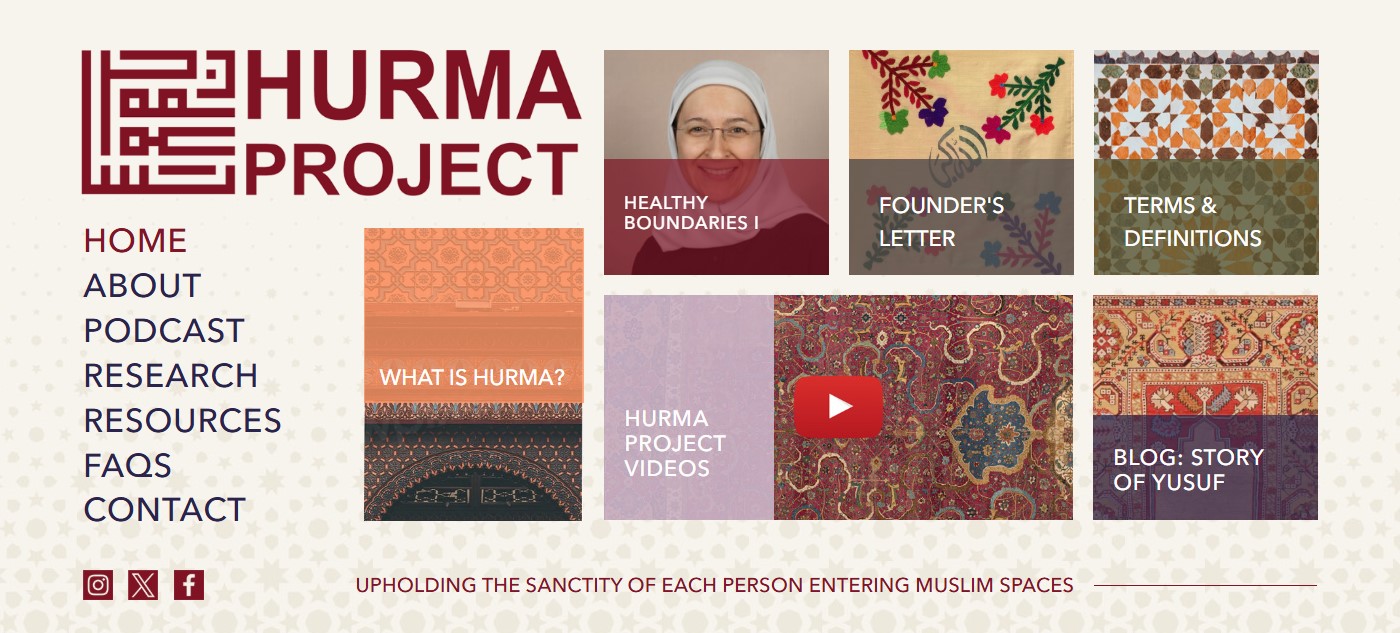
The About section introduces the meaning, history and foundational principles of hurma. Separate pages provide information about the project’s development, its founder, leadership team and advisors.
The Research section brings together original Hurma Project papers, related journal articles and external research. This positions the website as a growing knowledge repository rather than a simple introduction to the organisation.
A dedicated Podcast section contains two seasons of conversations with imams, chaplains, therapists, academics, lawyers and community leaders. Individual episodes include guest information, transcripts and downloadable audio, allowing visitors to consume the material in several formats.
The Resources and FAQ sections provide more accessible entry points for visitors who may not be ready to read full academic papers. The Contact section also explains the scope of the organisation and clarifies that the Hurma Project is not an investigative body.
This structure creates a natural progression from basic understanding to deeper research and practical learning.
A Respectful Design Direction
The visual direction needed to reflect the seriousness of the subject without making the experience intimidating.
An editorial approach was used to give the website the character of a research and educational publication. Strong headings, structured content sections, article imagery, contributor profiles and visual content cards help visitors move through substantial amounts of information.
The design avoids a heavily commercial presentation. Instead, the emphasis remains on the project’s ideas, research and people.
Photography and podcast artwork introduce a human element, while the structured page layouts support longer academic and educational content. Content cards also allow articles, podcast episodes and resources to be presented in a more approachable format.
Designing for Sensitive Content
Because the website discusses abuse, spiritual harm and violations of trust, user safety had to be considered as part of the interface.
A visible Safety Exit gives visitors a quick way to navigate away from the website. The Contact page clearly explains what the organisation can and cannot provide, helping prevent visitors from mistaking it for an investigation, reporting or emergency service.
The language throughout the website is educational and measured. Difficult subjects are presented through research, interviews and practical resources rather than through emotionally manipulative messaging.
This was an important design principle. The website needed to encourage understanding and accountability without exploiting the experiences of people affected by harm.
Building a Flexible WordPress Platform
WordPress provided the flexibility needed to manage a large and evolving collection of pages, research material, podcast episodes and educational resources.
Reusable page structures and content components help maintain visual consistency across the website. The platform can accommodate new research, articles, contributors and resources without requiring the entire website to be redesigned.
The podcast implementation supports episode descriptions, guest profiles, audio downloads and transcripts. Research content can also link to documents and external academic sources.
This makes the website manageable as a long-term publishing platform, not just a one-time website launch.
Presenting the People Behind the Project
Credibility is especially important for a project dealing with religious authority, law, mental health and community accountability.
The People section introduces the project’s founder, senior researcher, advisors and team members. Their professional backgrounds include Islamic studies, law, counselling, chaplaincy, education, social work and community leadership.
Presenting these contributors clearly helps visitors understand that the project is informed by multidisciplinary expertise rather than a single perspective.
The Final Result
The completed website provides the Hurma Project with a central digital platform for its research, educational work, podcast and community resources.
Instead of separating these materials across unrelated platforms, the website brings them together within a consistent and navigable system.
Visitors can begin with a simple explanation of hurma, learn about the project’s foundations, explore academic research, listen to expert discussions and access further resources according to their own needs.
The result is a content-rich WordPress platform designed to support serious learning, thoughtful discussion and the long-term development of the Hurma Project’s work.
Project Services
- WordPress website design and development
- Information architecture and content organisation
- Responsive page design
- Research and publication presentation
- Podcast content integration
- Contributor and advisor profiles
- Resource library development
- Contact and support pathways
- Ongoing content management capability
Project Reflection
The Hurma Project demonstrates how thoughtful web design can support difficult but necessary conversations.
For a project like this, successful design is not about decorative effects or aggressive calls to action. It is about clarity, trust, sensitivity and giving important information the structure it deserves.
The website provides a strong foundation from which the Hurma Project can continue publishing research, translating academic knowledge and helping Muslim communities better understand dignity, responsibility and accountability.
View the site here.
Love it, share it!