
Introduction
Institut Ilmu Darul Makmur, commonly known as IIDM, is a policy research and Islamic educational institution under MUIP Education Sdn. Bhd.
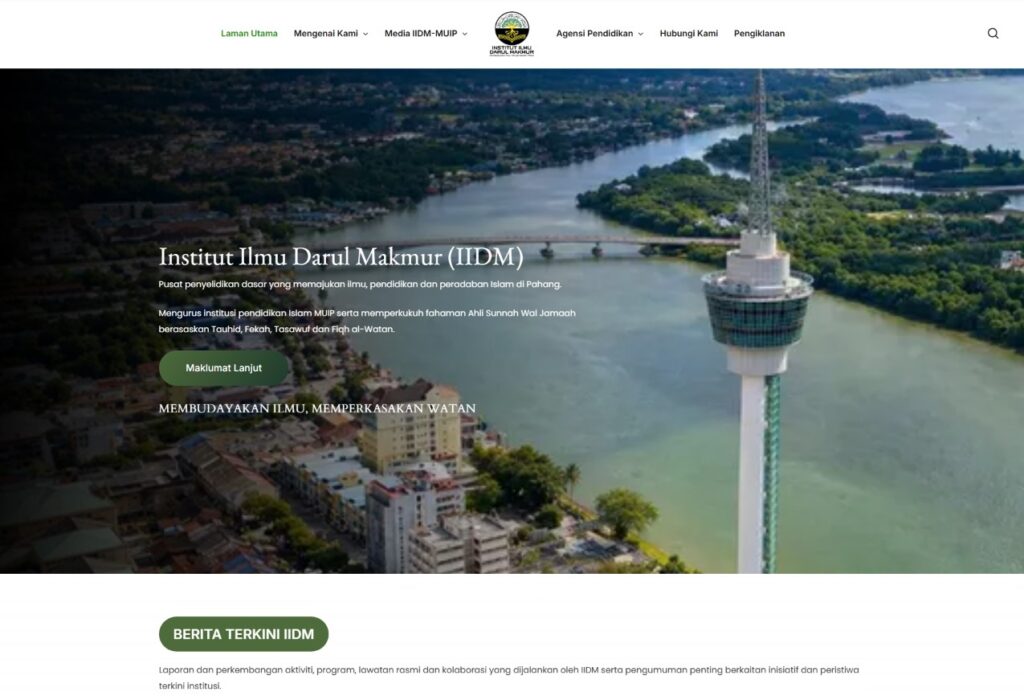
Its website contains institutional information, Islamic research, intellectual articles, news, educational programmes, videos and information about MUIP schools and preschools.
The website already had a substantial amount of valuable content. However, that content needed better organisation, stronger technical SEO and clearer signals for search engines.
The objective was not simply to increase an automated SEO score.
The real goal was to help more people discover IIDM’s research, programmes, educational institutions and Fiqh al-Watan content through Google.
The Challenge
IIDM’s website had grown into a large institutional publishing platform.
It contained many different types of content, including:
- Institutional news
- Islamic articles and research
- Fiqh al-Watan content
- Executive commentary
- Educational videos
- School and preschool information
- Programme reports
- Leadership and organisational information
While this volume of content created significant SEO potential, it also introduced several challenges.
Important pages were competing for attention. Some content was difficult to discover. Page titles and headings were not always consistent. Certain sections contained duplicated or thin content, while the homepage was handling too many different content types at once.
The website also needed a clearer structure so that Google could better understand the relationship between IIDM, MUIP, Fiqh al-Watan, its educational institutions and its published material.
The Technical SEO Approach
The SEO work focused on improving the website’s technical foundation, content hierarchy and search visibility.
Website Structure and Content Organisation
The website’s information architecture was reviewed to separate its major content areas more clearly.
The main categories included:
- Berita IIDM
- Minda Pengarah Eksekutif
- Makalah Pemikir Peradaban
- IIDM TV
- Fiqh al-Watan
- Tadika Pintar Al-Quran MUIP
- Sekolah Menengah Ugama MUIP
- Institutional and leadership information
This helped turn the website from a general collection of posts into a more structured institutional knowledge platform.
Clearer content categories also improved internal navigation and gave search engines better context about each section.
Homepage Restructuring
The homepage needed to communicate IIDM’s role more clearly.
Its positioning was refined to explain that IIDM is involved in Islamic policy research, education, civilisational development and the management of educational institutions under MUIP.
The homepage was also reorganised to give stronger visibility to:
- IIDM’s institutional purpose
- Recent news
- Intellectual articles
- Educational content
- Fiqh al-Watan
- Video resources
- MUIP educational agencies
This reduced the risk of important content becoming buried within a long and unstructured news feed.
Page Titles and Meta Information
Page titles, descriptions and headings were reviewed to improve their relevance and clarity.
The work focused on helping search engines and users understand:
- What each page was about
- Which institution or programme it represented
- How it related to IIDM and MUIP
- Which searches the page should appear for
This was especially important for institutional searches, educational programmes and Fiqh al-Watan-related content.
Heading Structure
Pages were reviewed for clearer heading hierarchy.
A well-structured page should normally contain one primary H1 heading, followed by supporting H2 and H3 sections.
Improving heading structure helped make long institutional and educational pages easier to scan while also strengthening their topical organisation for search engines.
Internal Linking
Internal links were improved between related articles, programmes, institutional pages and educational content.
For example, a page discussing Fiqh al-Watan could link to:
- Related programme reports
- IIDM TV lectures
- Research articles
- Institutional explanations
- Relevant executive commentary
This helped visitors continue exploring the website while distributing SEO authority between related pages.
Indexing and Search Engine Signals
Technical checks included reviewing:
- HTTPS configuration
- Canonical URLs
- XML sitemaps
- Search engine indexing
- Redirection consistency
- Duplicate content
- Page accessibility
- Search Console visibility
These elements help prevent search engines from indexing the wrong version of a page or treating similar URLs as separate content.
Image and Performance Review
The website contains a large number of event photographs, programme images, posters and institutional graphics.
These assets are valuable, but oversized images can significantly affect loading speed.
The optimisation review therefore included:
- Image dimensions
- File sizes
- Compression
- Page weight
- CSS and JavaScript delivery
- Number of page requests
- Mobile performance
Improving these areas is particularly important for users accessing the website through mobile connections.
SEO Health
An SEO audit completed during the project recorded an overall score of 88 out of 100.
The homepage already had several important SEO foundations in place:
- SEO-friendly page title
- Meta description
- Primary H1 heading
- Canonical URL
- HTTPS
- XML sitemap
- Consistent www redirection
This provided a strong base for further improvements.
The remaining issues were mainly connected to the scale of the website and the number of existing pages.
These included:
- Missing or weak meta descriptions
- Titles that were too long
- Missing or inconsistent H1 headings
- Thin-content pages
- Duplicate page titles
- Similar pages targeting the same topic
- Large image files
- Unoptimised CSS and JavaScript
- Excessive page requests
These findings formed the basis for ongoing optimisation and a longer-term SEO growth plan.
Google Ranking Results
IIDM achieved strong positions for several high-value branded and institutional search terms.
Recorded rankings included:
| Search keyword | Google position |
|---|---|
| Institut Ilmu Darul Makmur | 1 |
| Fiqh al Watan | 1 |
| IIDM MUIP | 1 |
| IIDM Pahang | 1 |
| Institut Ilmu Darul Makmur Pahang | 1 |
| Program IIDM | 1 |
| Program dakwah terkini di Pahang | 3 |
| Tadika Islam Pahang | 5 |
| Kursus agama Pahang | 6 |
| Peradaban Islam | 7 |
These results show that the website had developed strong visibility for its institutional identity, programmes and core Fiqh al-Watan initiative.
The website was no longer relying only on users who already knew the exact domain name.
People searching for relevant institutions, Islamic programmes and educational topics could also discover IIDM through Google.
Website Traffic Growth
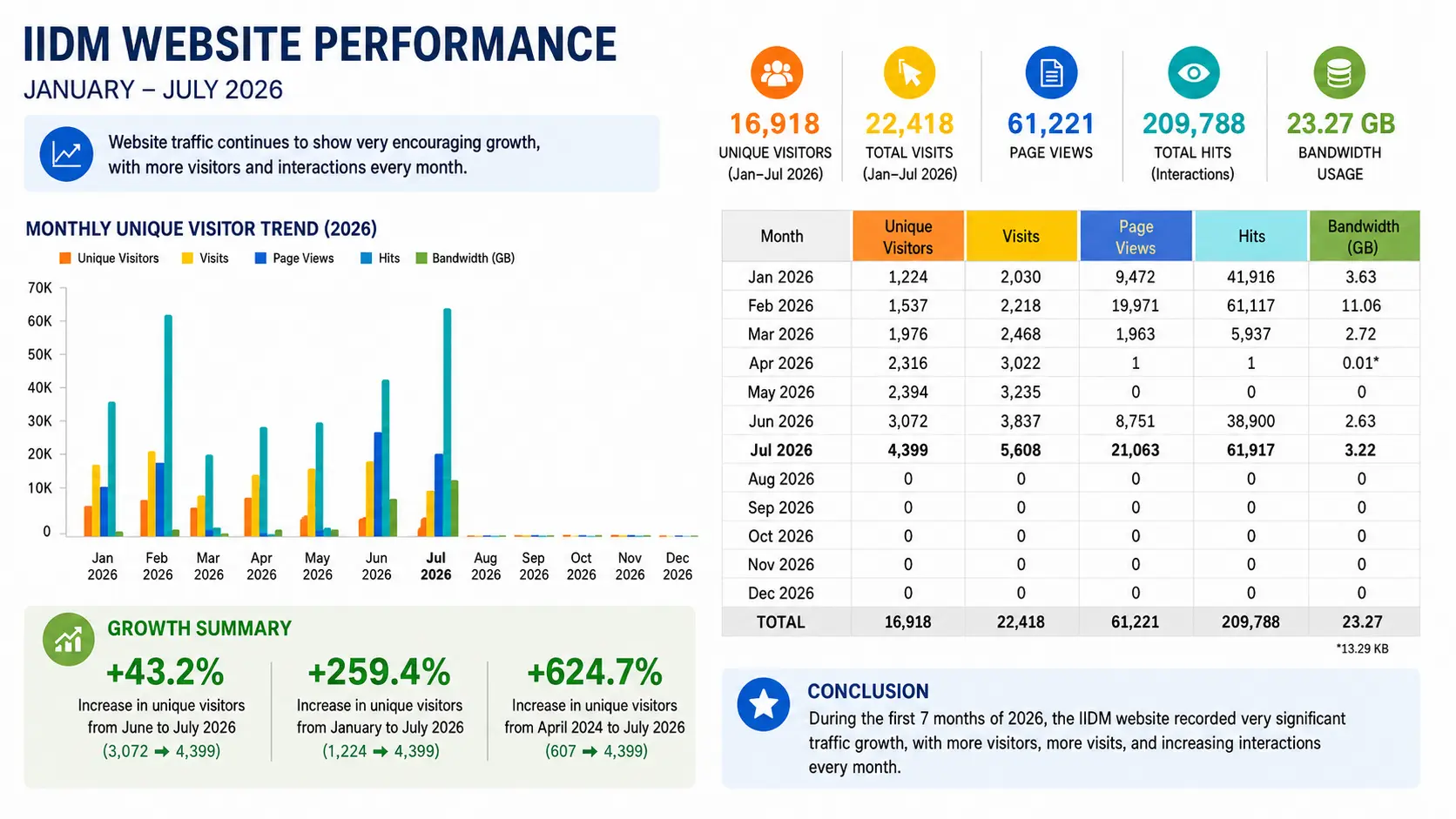
Website traffic reports also showed substantial growth.
Recorded monthly unique visitors included:
| Reporting period | Unique visitors |
|---|---|
| April 2024 | 607 |
| June 2026 | 3,072 |
| July 2026 | 4,740 |
By July 2026, the website was receiving 4,740 monthly unique visitors and 6,120 visits.
Compared with April 2024, this represented an increase of approximately 681% in monthly unique visitors.
The website also recorded 66,539 Google impressions, with an average Google search position of approximately seven during the reviewed reporting period.
These figures showed that IIDM’s content was appearing more frequently in search results and reaching a considerably larger online audience.
What Contributed to the Growth
Website traffic rarely increases because of one isolated change.
The improvement was supported by a combination of factors:
- Stronger technical SEO foundations
- Clearer content organisation
- Consistent publishing
- Better page titles and headings
- Improved internal linking
- More relevant institutional descriptions
- Search-friendly article content
- Greater visibility for Fiqh al-Watan
- Website restructuring
- Ongoing SEO monitoring
- An expanding archive of news, videos and educational material
IIDM already had valuable subject-matter expertise and a large amount of original content.
The SEO work helped make that content easier for search engines and visitors to discover.
The Importance of Content Ownership
One of the most important outcomes of the project was helping IIDM build visibility through its own website.
Institutional content is often published only on Facebook or other social media platforms.
The problem is that social media posts quickly disappear from view and are difficult to organise as a long-term knowledge resource.
By publishing news, lectures, research and educational content on the IIDM website:
- Programme reports became searchable records
- Articles became part of a permanent knowledge archive
- Videos could be organised by subject
- Educational institutions gained dedicated pages
- Google could index and rank the content
- Visitors could discover related IIDM resources
This gave IIDM greater ownership and control over its digital presence.
Remaining SEO Opportunities
Although the results were encouraging, the website still had significant growth potential.
The next phase of optimisation could focus on:
- Writing unique meta descriptions for important pages
- Shortening and standardising page titles
- Correcting missing H1 headings
- Consolidating duplicate content
- Expanding thin pages
- Improving image compression
- Reducing page-load requests
- Minifying CSS and JavaScript
- Creating stronger topic clusters
- Improving non-branded keyword rankings
- Optimising pages with high impressions but low click-through rates
- Creating a dedicated Fiqh al-Watan knowledge centre
- Improving structured data
- Strengthening calls to action
- Measuring registrations and enquiries
These improvements could help the site move beyond branded searches and compete for broader Islamic education, research and programme-related keywords.
The Results at a Glance
The project produced several measurable outcomes:
- SEO audit score of 88 out of 100
- First-position rankings for multiple IIDM and Fiqh al-Watan keywords
- 66,539 Google search impressions
- Average Google position of approximately seven
- 3,072 unique visitors in June 2026
- 4,740 unique visitors in July 2026
- 6,120 total visits in July 2026
- Approximately 681% visitor growth compared with April 2024
- Improved organisation of institutional, educational and research content
- A stronger technical foundation for future SEO growth
An Honest View of Attribution
It would not be accurate to claim that every increase in traffic was caused by technical SEO alone.
IIDM’s regular publishing, public programmes, institutional reputation, social media activity and growing body of educational content also contributed to the results.
However, technical SEO, website restructuring and content optimisation helped ensure that these efforts could be discovered through Google.
The defensible conclusion is that sustained website and SEO improvements contributed to stronger rankings, greater visibility and substantial traffic growth.
The Final Outcome
The IIDM-MUIP project demonstrates how technical SEO can support an institution with a large and complex content library.
The work went beyond fixing individual metadata issues.
It involved improving how the website was structured, how its content was categorised, how pages were connected and how search engines understood the organisation.
The website developed into a stronger platform for:
- Islamic research
- Institutional communication
- Educational content
- Fiqh al-Watan
- Video learning
- Programme documentation
- MUIP educational institutions
- Long-term Google visibility
The result was a website that became easier to navigate, easier to manage and significantly easier to discover through search.
SEO Services Provided
- Technical SEO audit
- WordPress SEO optimisation
- Website architecture review
- Homepage restructuring
- Page title and meta-description optimisation
- Heading hierarchy improvements
- Internal linking
- Canonical and redirect review
- Sitemap and indexing checks
- Duplicate-content review
- Image and performance analysis
- Keyword monitoring
- Google Search Console analysis
- Website traffic reporting
- Content optimisation recommendations
- Long-term SEO growth planning
Project Reflection
This project shows that organisations often already possess the content needed to grow online.
The missing element is usually structure.
When valuable content is poorly organised, weakly titled or technically difficult for search engines to interpret, much of its potential is lost.
By combining technical SEO with clearer content architecture and ongoing publishing, IIDM was able to strengthen its Google presence and reach a much larger audience.
Technical SEO did not replace the institution’s knowledge or content.
It helped that knowledge become visible.
View the site here.
Love it, share it!